Learning
Level Up Your Learning: The Ultimate Guide to the Gamification of Studies
Turn studying into a game with quests, XP, practice quizzes and useful feedback. Explore benefits, practical strategies and pitfalls to avoid.
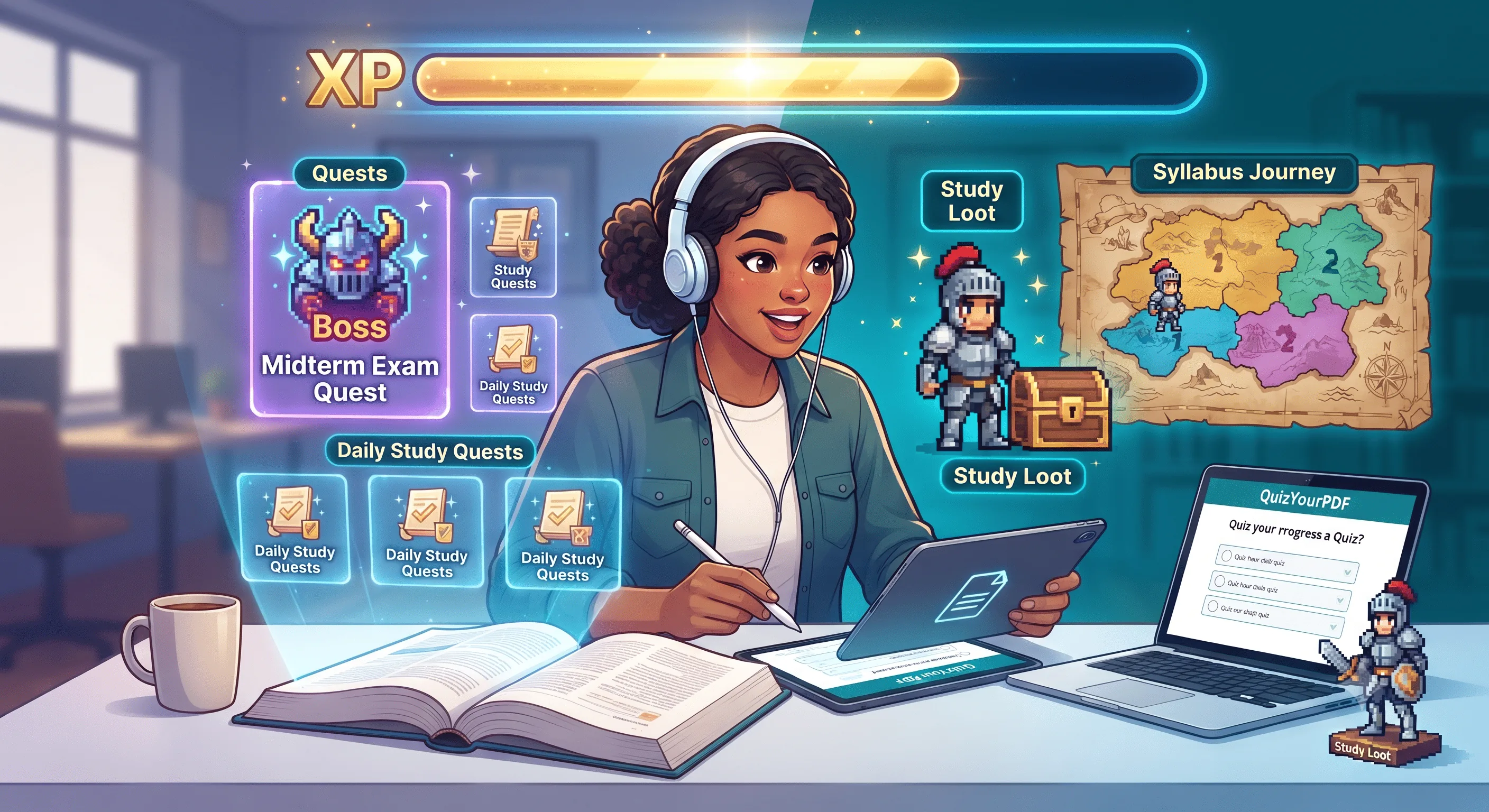
Picture this: You sit down at your desk, stare at a three-hundred-page textbook, and feel an immediate wave of exhaustion. Your eyes drift to your phone, where a notification pops up inviting you to join a raid with friends in your favorite video game. Within seconds, you are fully immersed, strategizing, managing resources, calculating probabilities, and cheerfully trying again after a dramatic defeat.
Why does studying feel different from a game?
Now, ask yourself an honest question: Why can you spend four hours straight conquering a complex virtual world, but struggle to focus on forty minutes of reading a history chapter?
The secret isn’t that you lack discipline or hate learning. The secret lies in the design. Video games are engineered to trigger deep psychological engagement, clear feedback loops, and a continuous sense of progression. Traditional education, on the other hand, has historically relied on passive listening, delayed gratification, and the looming threat of penalties.
Enter the gamification of studies—a powerful educational movement that bridges this gap by borrowing the most engaging mechanics of game design and injecting them into the academic journey. Whether you are a student looking to conquer your next exam or an educator trying to spark life into a classroom, turning studies into a game might just be the ultimate cheat code.
What Exactly Is Gamification? (And What It Isn’t)
Before we level up our study habits, let’s clear up a common misconception. Gamification is not about playing video games in class instead of studying.
Game-based learning involves using a dedicated educational game (like Minecraft Education or math puzzle games) to teach a subject. Gamification, by contrast, takes non-game environments—like a chemistry syllabus, a vocabulary list, or an organic chemistry textbook—and layers game elements on top of them.
Think of gamification as a framework. It transforms a flat, linear checklist of tasks into a dynamic landscape filled with quests, experience points, milestones, and achievements. It uses the familiar triad of PBLs (Points, Badges, and Leaderboards) alongside deeper game-design principles like narrative, player choice, and immediate feedback.
The Neuroscience of Play: Why Gamification Works
To understand why gamifying studies can be so engaging, look at how games make progress visible and mistakes less final. Small goals and feedback make it easier to decide what to do next.
- The Dopamine Loop of Achievement. Dopamine is often misunderstood as the molecule of pleasure; it is also involved in anticipation and motivation. When you complete a mini-goal—like unlocking a new skill or finishing a daily quest—the reward can encourage you to take the next step. Traditional studying rarely offers these micro-rewards, leaving students running on willpower by the time midterms roll around.
- Reframing Failure. In a traditional classroom, a failed test can feel like a dead end—a red mark stamped onto your permanent record. In a video game, failure is diagnostic data. If your character loses a boss fight, you analyze what went wrong, tweak your strategy, and try again. Gamifying studies can shift your relationship with mistakes, turning errors into opportunities to learn rather than sources of shame.
- Adding a Story. A narrative or interactive challenge can make information feel less like a list of isolated facts. Use a story as a prompt to explain and retrieve what you learned, not as a replacement for practicing the material itself.
Key Benefits of Gamification in Academics
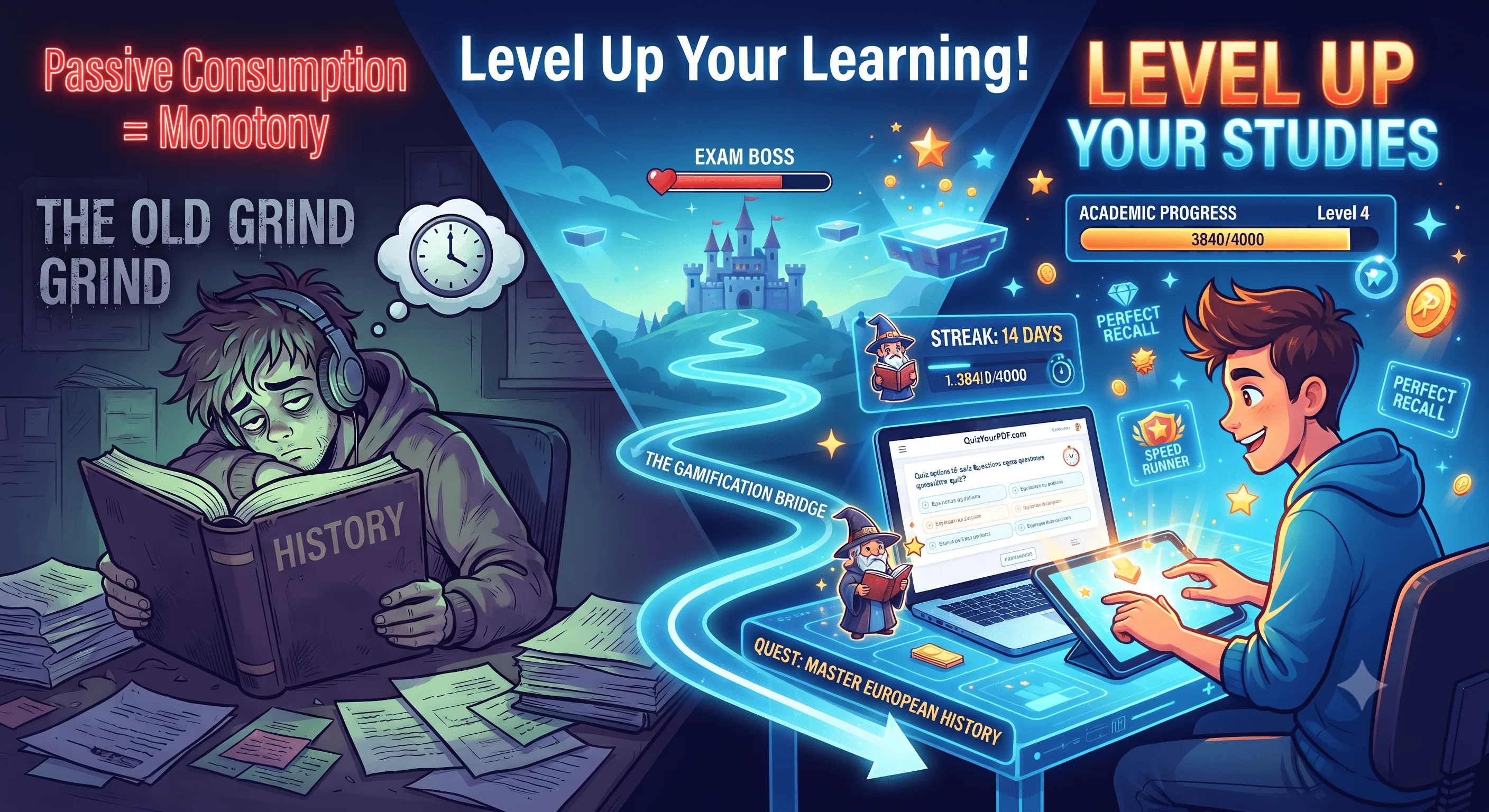
When implemented thoughtfully, gamifying your educational routine can change how you approach a difficult subject.
- Intrinsic and Extrinsic Motivation Fusion: Points and badges are external markers, but they can help make progress visible while you build curiosity and mastery.
- Radical Ownership: Choose which quests to tackle first or decide when to spend an extra life to redo an assignment.
- Reduced Cognitive Fatigue: Breaking a semester-long syllabus into bite-sized levels and daily missions makes a large goal feel manageable.
- Healthy Competition and Community: Collaborative quests and friendly peer scoreboards can build shared momentum rather than leaving you to study alone.
Practical Strategies to Gamify Your Own Studies
You don’t need a custom-built software application or a million-dollar budget to gamify your learning life. You can redesign your study habits starting this afternoon using four core strategies.
Strategy 1: Ditch Letter Grades for Experience Points (XP). Stop viewing every practice session through the lens of intimidating percentages. Instead, assign an XP value to each completed task. For example: reading a textbook chapter = 50 XP; completing 10 practice math problems = 100 XP; writing an essay outline = 250 XP. Establish a leveling system: if 1,000 XP equals Level 2, track progress on a whiteboard or in a notes app. These are your own motivational points, not a substitute for real feedback or exam grades.
Strategy 2: Turn Chapters into Boss Fights and Quests. Reframe your syllabus as an open-world RPG map: main quests are major assignments, midterms and final exams; side quests are optional reading, extra credit or flashcard reviews; boss fights are comprehensive practice tests or difficult problem sets. Before starting a large unit, choose a small reward for finishing it—a guilt-free evening with a favorite hobby or a favorite snack.
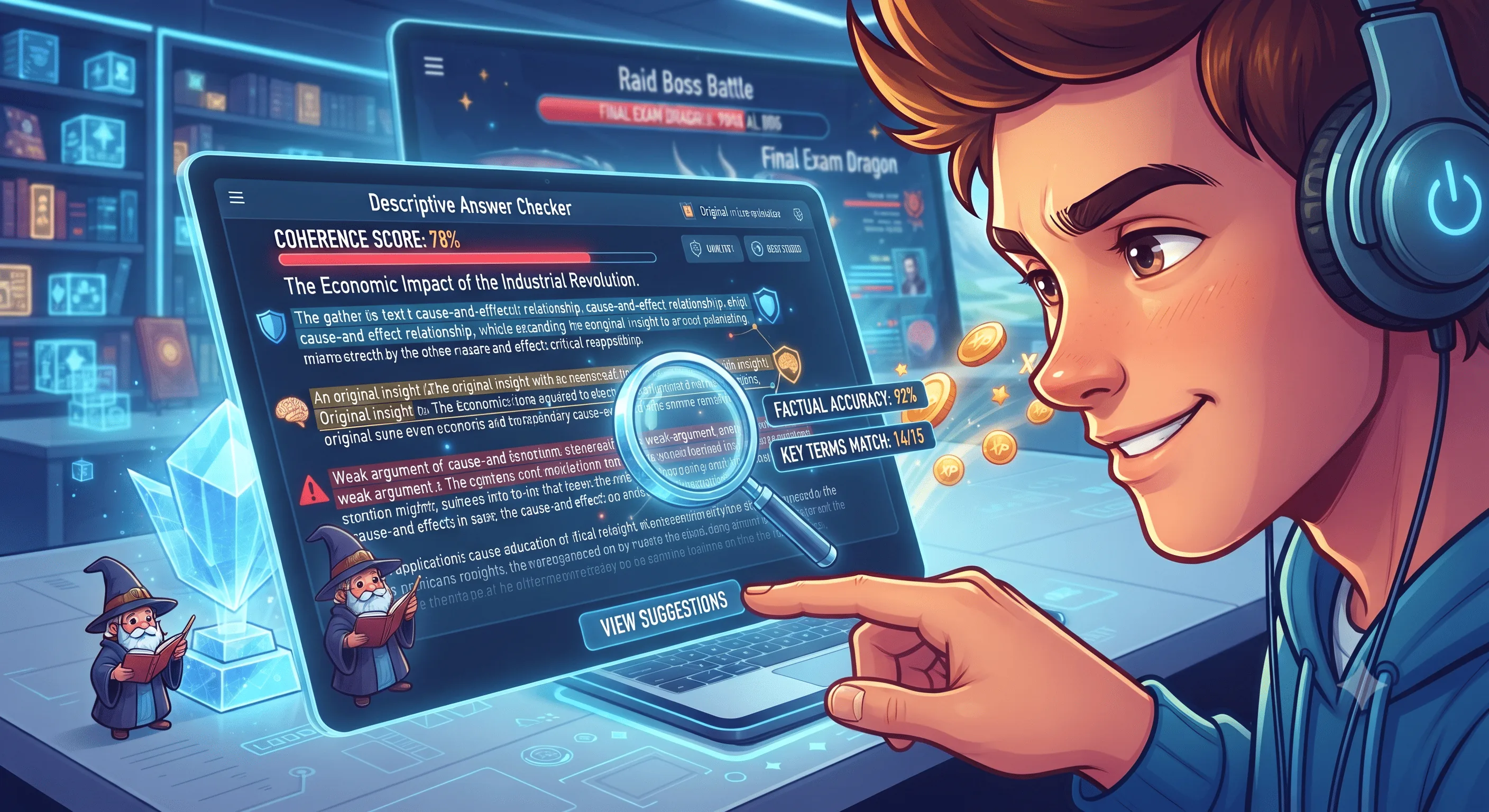
Strategy 3: Leverage Digital Tools like QuizYourPDF. Transform dense, static study materials into interactive practice. QuizLab lets you upload a text-based PDF and generate a quiz from it. Race a timer and build streaks; choose Chill, Mid or Brutal difficulty; use Practice Mode for immediate answers and fact-check details, or Exam Mode to reveal feedback at the end. The Study Guide Generator turns your syllabus into a weekly plan, and the Descriptive Answer Checker helps you review a written response across several marking dimensions. Always check AI-generated content against your source material.
Strategy 4: Introduce the Three Lives Rule. Give yourself a buffer when tackling difficult past papers or quizzes. Start with three lives. For each wrong answer, use one life and analyze the explanation before trying a related question. The aim is resilient problem-solving, not racing through errors.
Pitfalls to Avoid: Keeping Gamification Healthy
While gamification can make study sessions more engaging, it is important to navigate it wisely to avoid common traps.
- The Trap of Superficial Clicking: Earning points shouldn’t become an exercise in clicking buttons or rushing through material just to pad your stats. Game mechanics must serve the learning objective.
- Burnout from Hyper-Competition: Leaderboards can backfire for anxious learners. Make the primary competition you versus your past self, rather than you versus the top student in the class.
- Over-Reliance on Extrinsic Rewards: Don’t let treats become the only reason you study. Use them as training wheels while building your own curiosity and satisfaction in mastering a topic.
Conclusion: Turn Your Desk into Your Playground
Learning is one of humanity’s great adventures. We are wired to explore, decode patterns, conquer challenges, and master new skills. Yet studying can still feel like a chore when the goal seems distant and progress is invisible.
By introducing clear goals, immediate feedback, meaningful progression, and the freedom to fail and try again, you can reclaim some of the joy of discovery. Your next study session doesn’t have to feel like a punishment. Grab your character sheet, map out your quests, and prepare to level up.
What is one subject or topic you’ve been struggling to master lately, and how can you turn your next study session into a game?
Try it with your own material
Put this idea into practice with QuizLab. Check important details against your original notes.
Turn your notes into a quiz