Learning
How to study with active recall (without just rereading your notes)
Learn a simple active recall routine: turn your notes into questions, answer from memory, check the gaps and revisit what you missed.
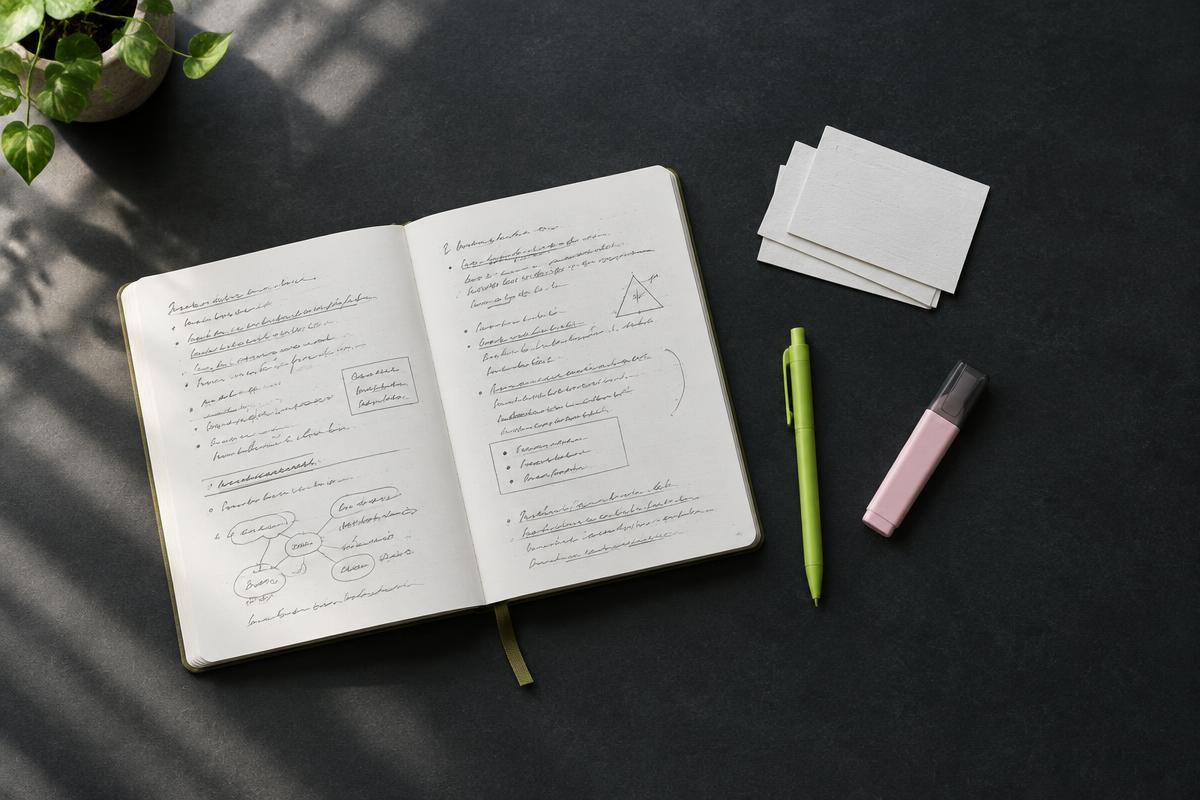
You finish a chapter, reread your highlights, and everything looks familiar. But could you explain it with the book closed? That is the difference active recall is designed to reveal.
What active recall actually means
Active recall means trying to retrieve an answer from memory before looking at the material. You can do it with a blank page, flashcards, practice questions or a friend asking you to explain a topic. The important part is attempting an answer first, not just recognizing it when you see it.
Research on retrieval practice finds that testing can support learning, not only measure it. But a question you cannot answer still needs feedback: check the source and correct the mistake rather than memorizing a guess.
A 20-minute routine you can try today
Pick one small section of your notes. Keep the questions specific enough to answer and check in one sitting.
- Read the section once, then close or hide it.
- Write three to five questions about its core ideas: what, why and how.
- Answer them without peeking. Say the answer aloud or write it down.
- Open your notes and compare. Mark missing steps and wrong assumptions, not just a right/wrong score.
- Try the missed questions again later, after studying the relevant explanation.
Make questions that test understanding
Instead of ‘What is photosynthesis?’ alone, ask ‘Why does a plant need light for this process?’ or ‘What would change if light were unavailable?’ In a history chapter, move from a date to a cause and consequence. Different prompts uncover different gaps.
If a question is ambiguous or your notes disagree with a generated answer, go back to the original material. A quiz is a practice tool, not an authority on your syllabus.
What to do after a wrong answer
Write a one-line correction in your own words, then make a new question about the precise part you missed. If you guessed correctly, treat that as a gap too. Your goal is to be able to explain the idea without relying on the options as clues.
QuizLab can turn a text-based PDF into a practice quiz. Use its feedback as a starting point, then check important claims against your own notes and the cited sources.
Try it with your own material
Put this idea into practice with QuizLab. Check important details against your original notes.
Turn notes into a practice quiz